
Why stucco openings are different
Most homes around Santa Fe are wrapped in stucco: cement stucco over lath and building paper on frame walls, or stucco and plaster on adobe and block. The original windows were installed with a nailing fin, a flange around the frame that's nailed to the wall framing and then covered by paper and stucco. That fin is locked into the wall. To take the window out cleanly and put a new nail-fin unit in, the stucco around the opening has to be cut back.
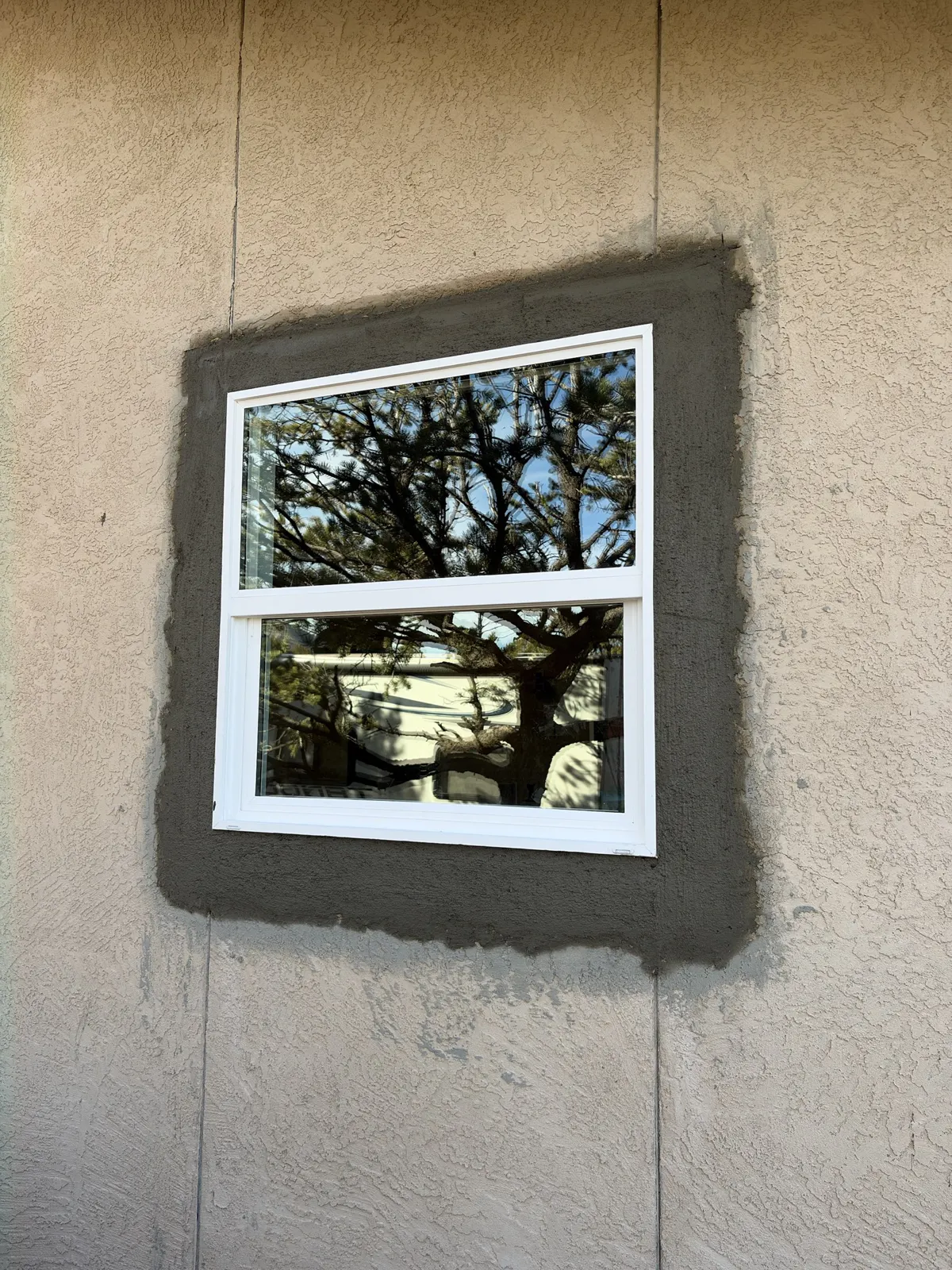
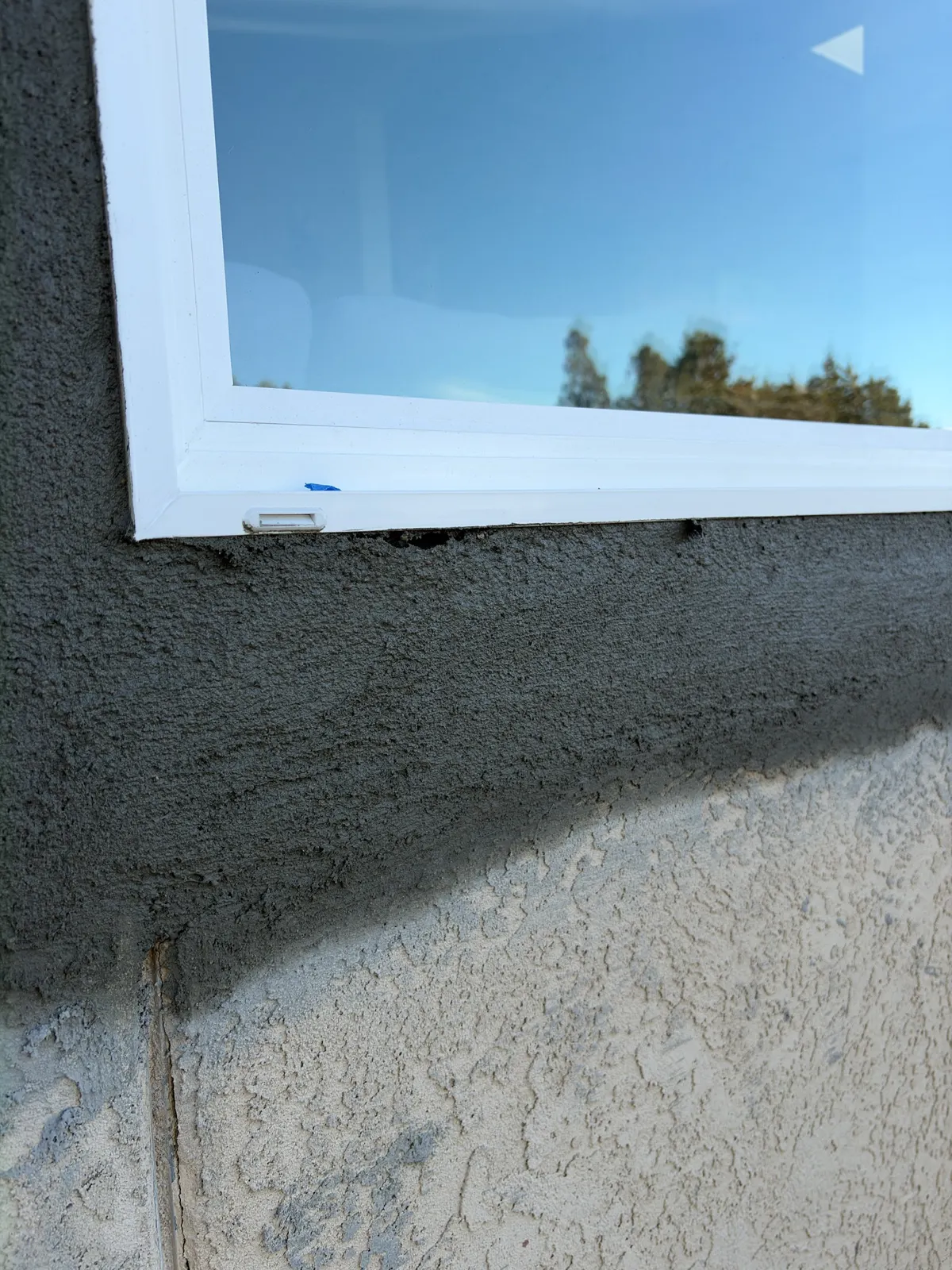
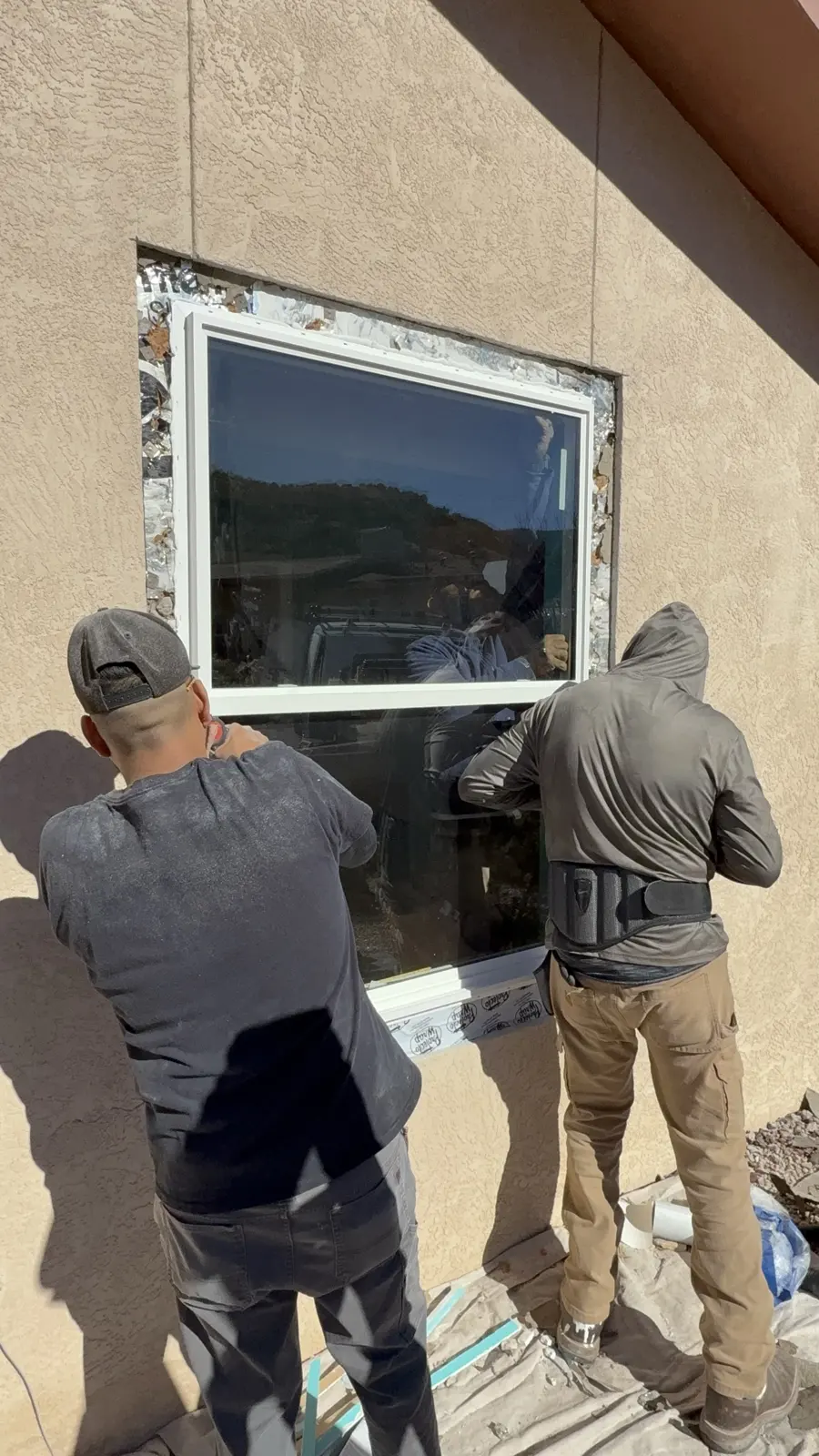
Done carelessly, this is where leaks come from. The building paper behind the stucco is the real water barrier, and if the new window isn't tied into it correctly, rain and snowmelt run behind the stucco and straight into the framing. Done carefully, a stucco cut-out install is the most watertight window install there is. The photos on this page are from our own jobs, taken at the stage most companies don't show: base coat on, color coat not yet applied.
Our cut-out sequence
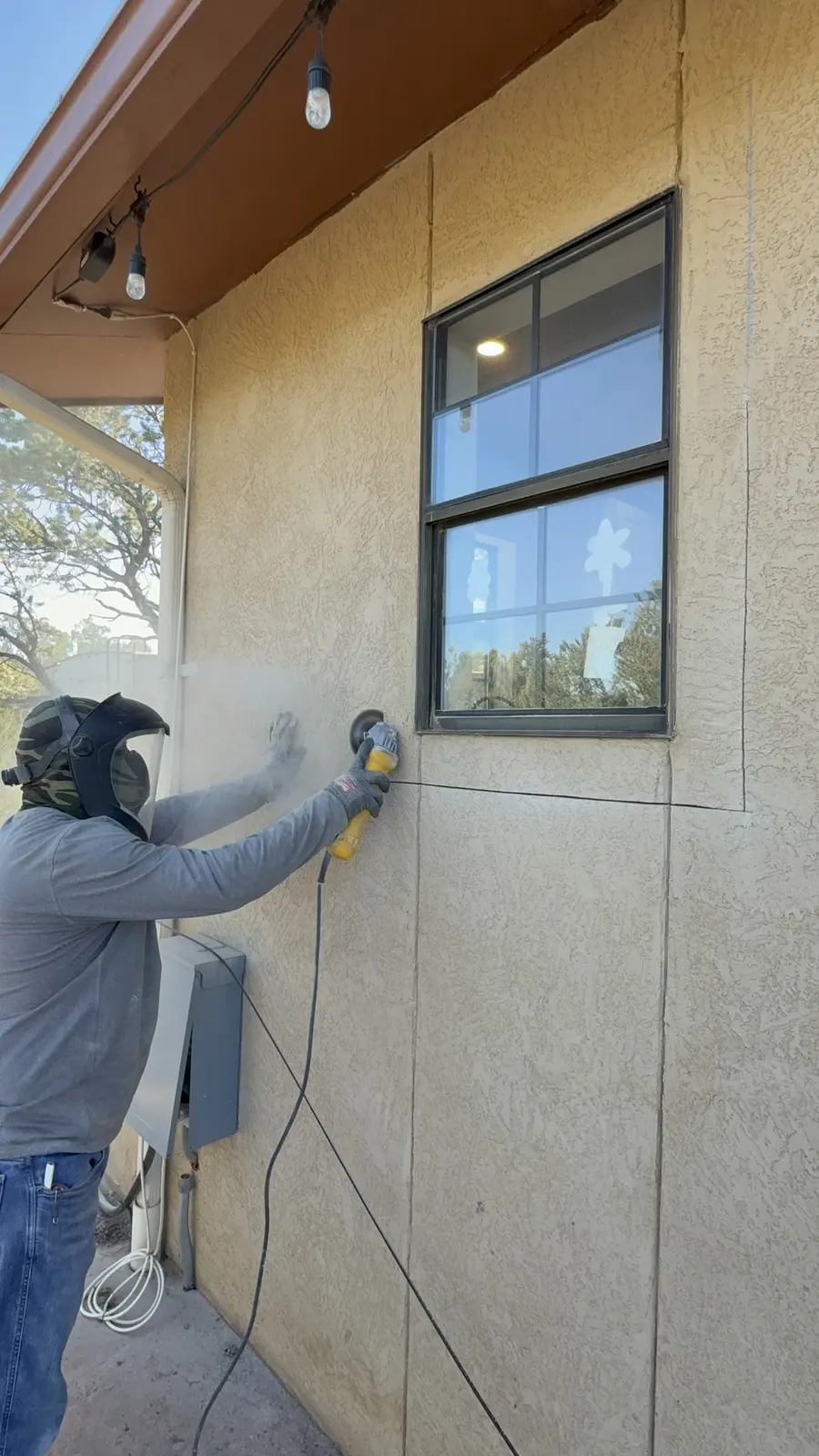
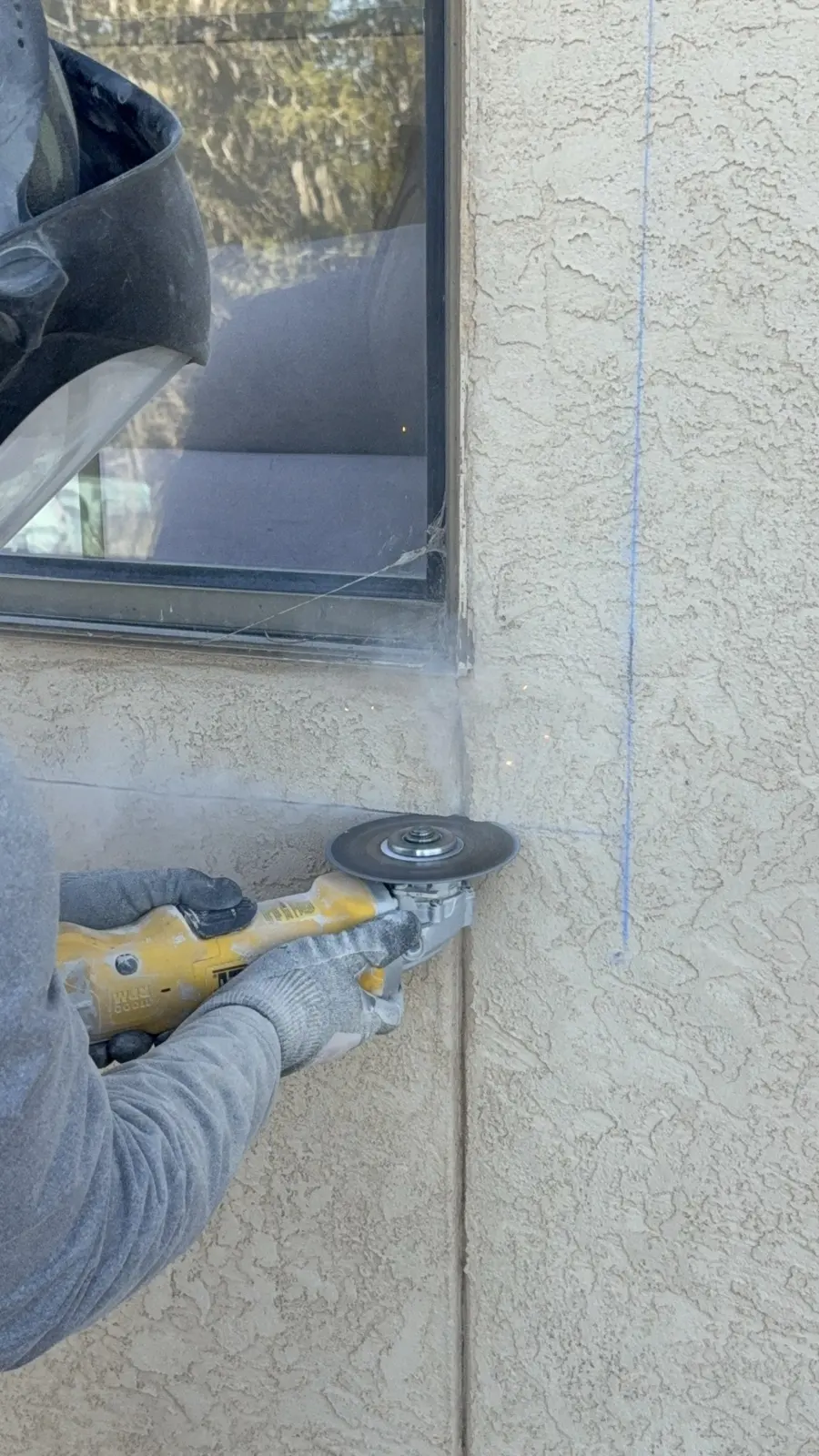
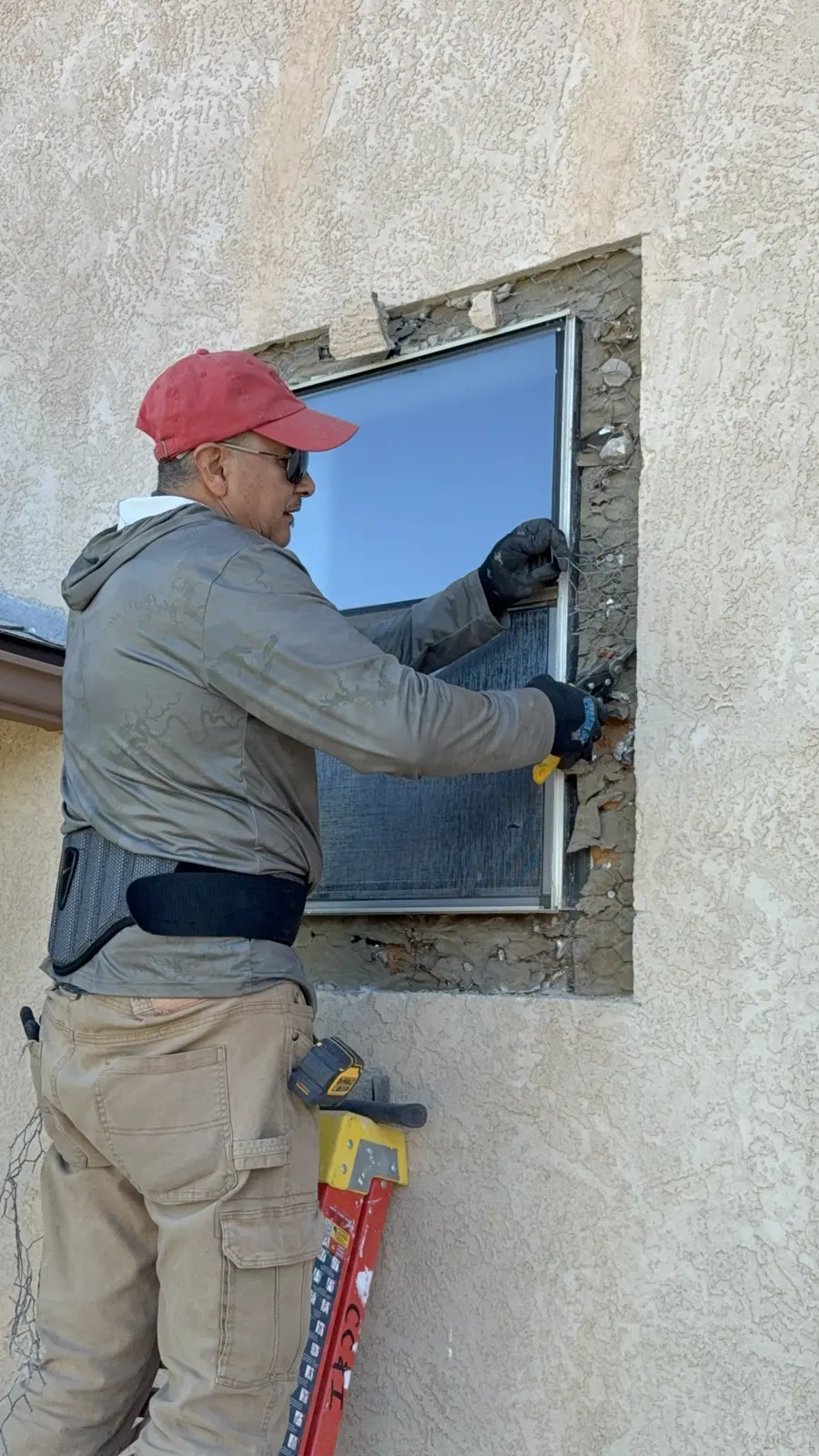
- Score and cut. We cut the stucco in a neat rectangle several inches out from the frame, deep enough to free the nail fin without damaging the lath beyond the cut line.
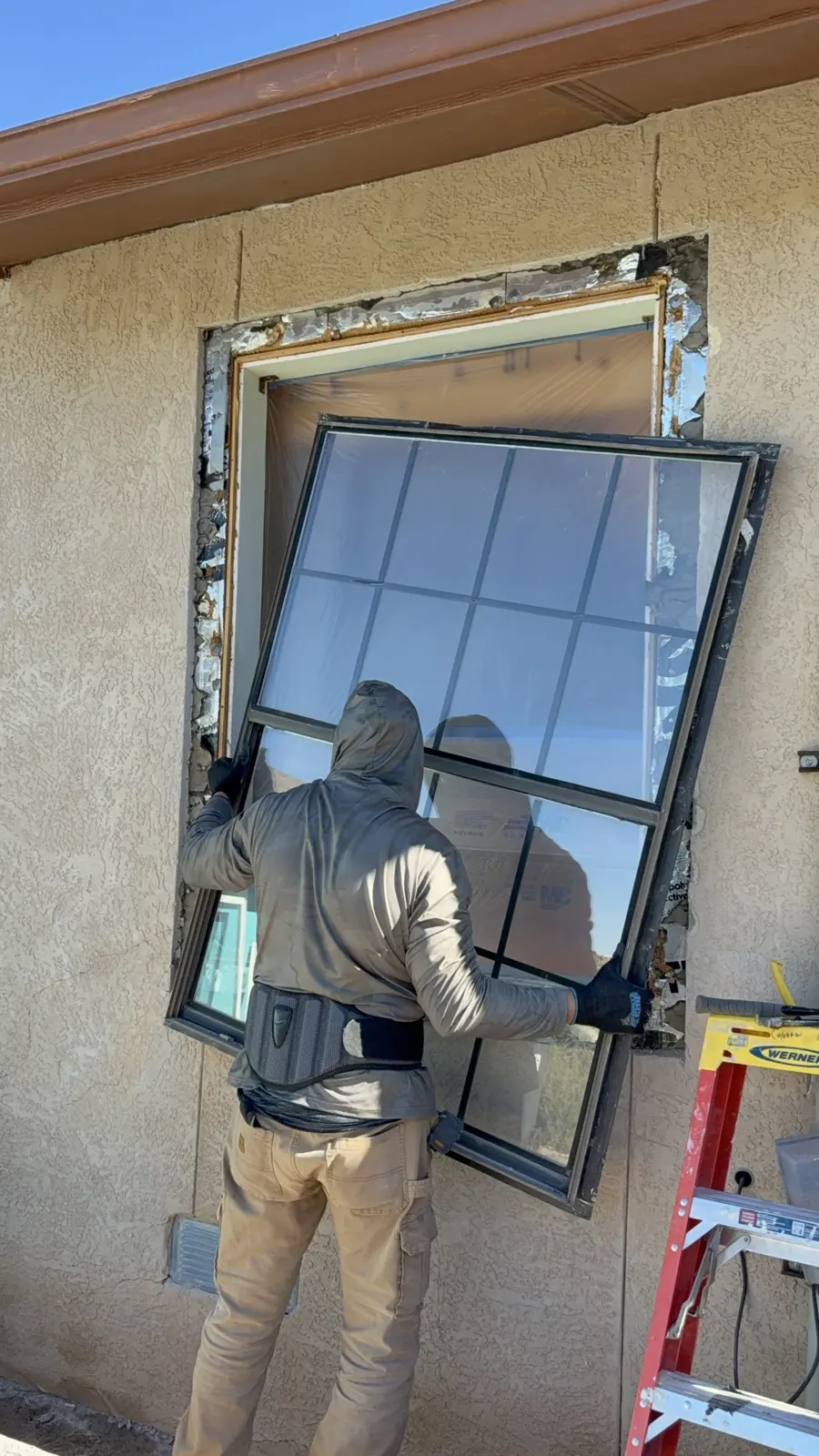
- Remove the old unit. Nails pulled, old sealant cut, frame out. Then we look at the framing: sill plate, jack studs and header. Soft or dark wood gets addressed now, not covered up.
- Sill pan. A sloped, flexible flashing or formed pan goes across the bottom of the opening and up the sides, so any water that gets past the window drains outward.
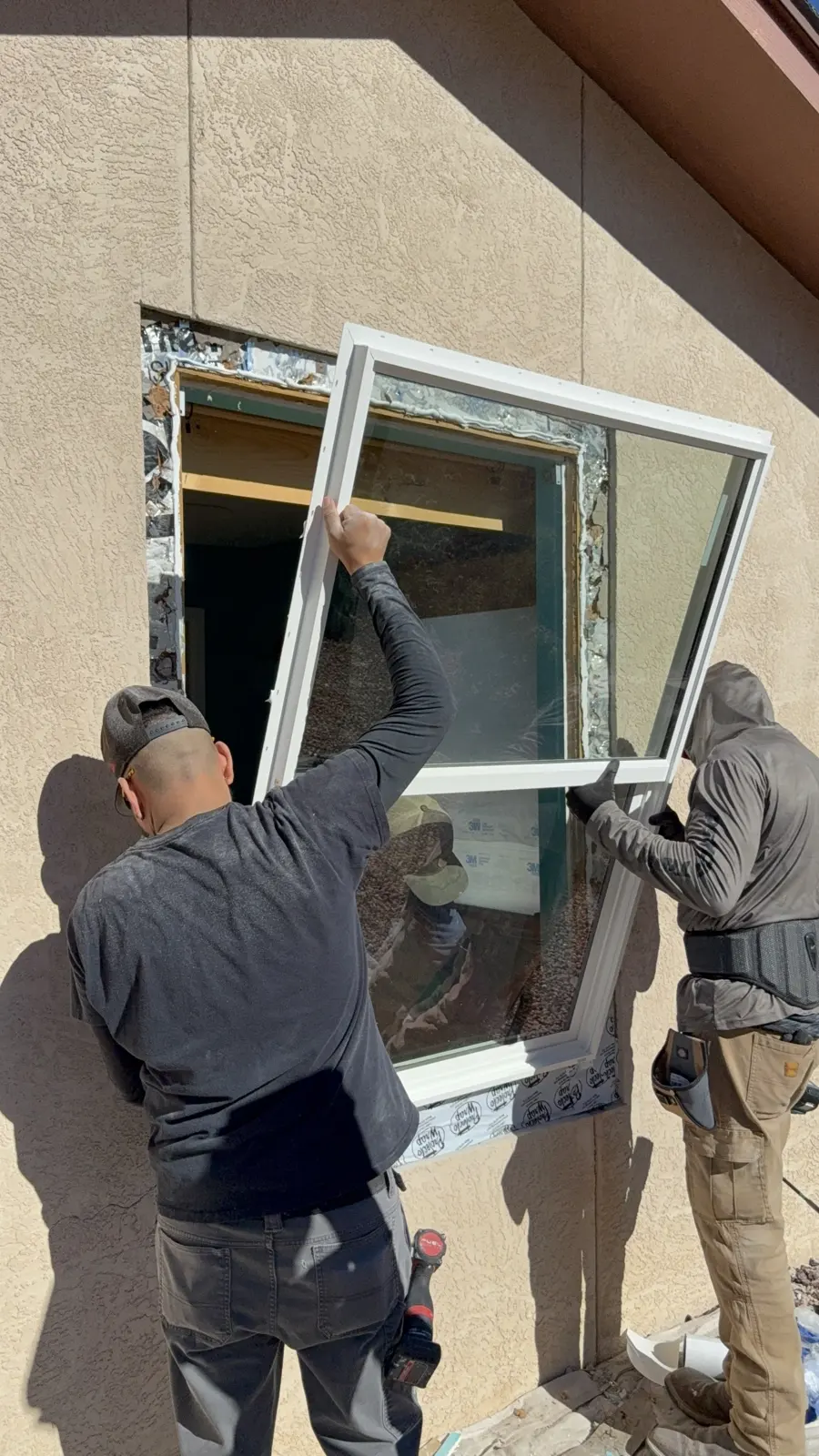
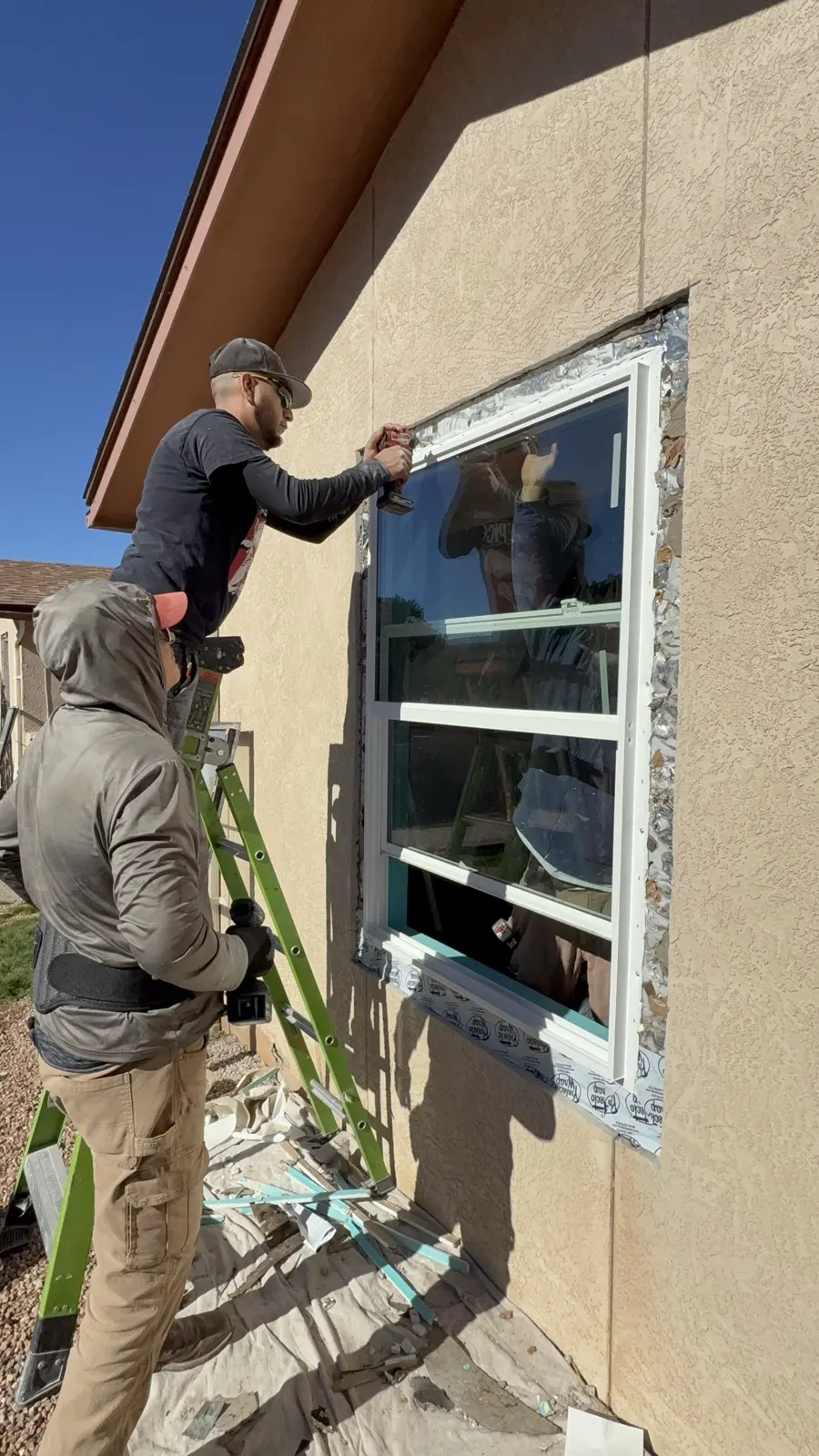
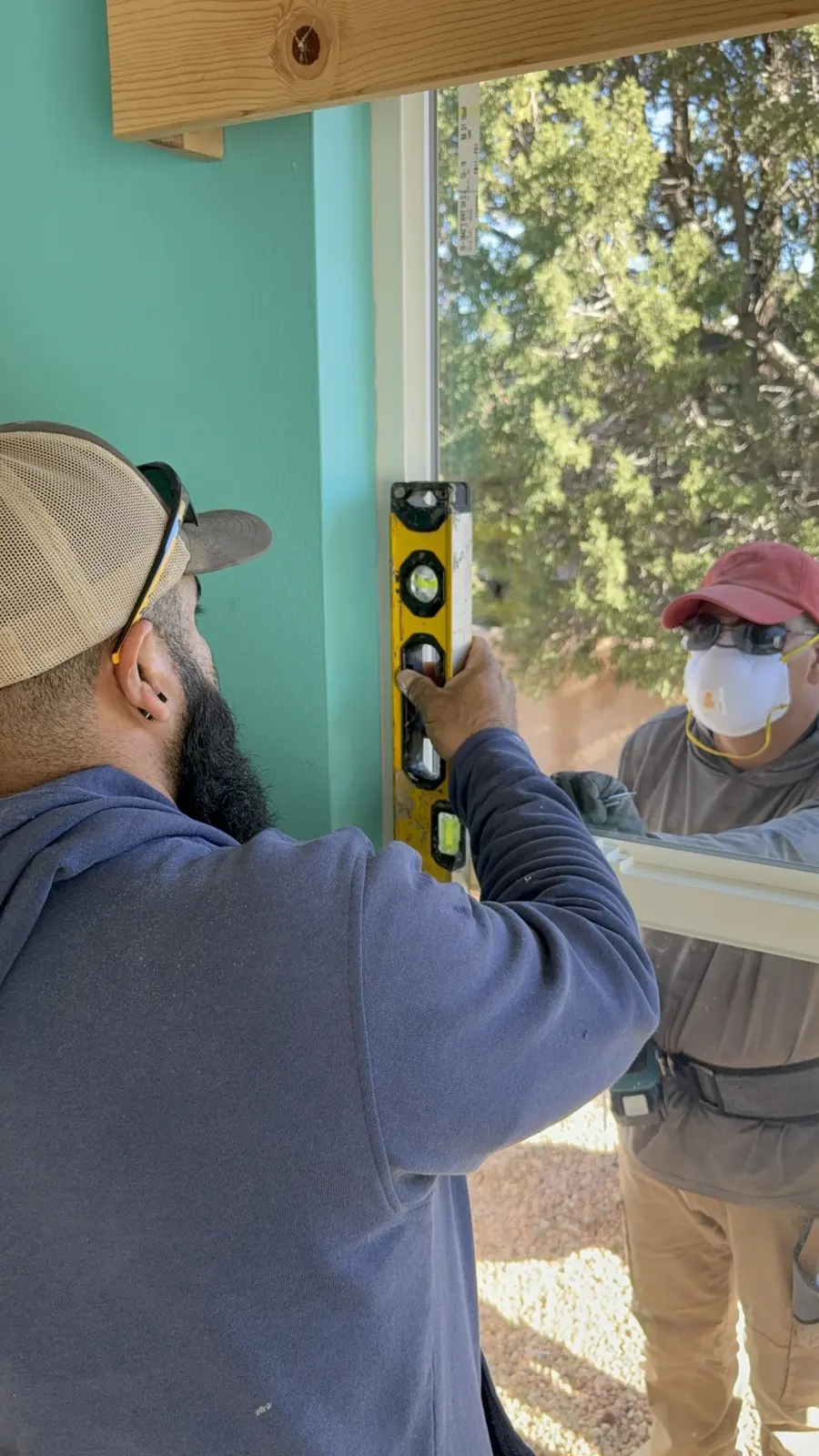
- Set the window. The new nail-fin unit goes in level, plumb and square, shimmed and fastened per the manufacturer's instructions.
- Flash in shingle order. Self-adhered flashing tape seals the fin to the wall: sides first, then the head, each layer lapping over the one below so water always runs out, never in. New building paper is woven into the old paper at the edges of the cut.
- Lath and stucco. New lath, then the scratch and brown coats, the dark gray you see in our photos. Each coat needs time to cure.
- Color coat. The finish coat is matched to your wall color and troweled to match the surrounding texture.
The same job, step by step
These are photos from one Winwood job, in the order the work happened. They show the part of a full-frame install that ends up hidden behind the stucco.
Why the patch looks dark at first
Homeowners sometimes see the gray patches and worry. That gray is the cement base coat, and it's supposed to look like that. It needs to cure before the finish coat goes on. Rushing the color coat onto green base coat invites cracking. We schedule the finish so each layer gets the time it needs, then come back to match color and texture.
Color matching on weathered walls
Santa Fe sun fades stucco, so a wall that started as one color twenty years ago is a slightly different color today, and often different from side to side. We match the finish coat to the wall as it is now, not to the original color card, and we feather the texture so the patch blends at a normal viewing distance. On walls with heavy fading or multiple old repairs, we may suggest finishing a full section corner to corner so there's no visible "picture frame" around the window. We'll talk about that before we start.
When cut-out is worth it, and when it isn't
Full-frame stucco work costs more and takes longer than a retrofit. It's worth it when water has been getting in, when the frame is damaged or out of square, when you want more glass, or when the old window is a type that can't be retrofitted cleanly. If your frames are dry and solid, a flush-fin retrofit may give you most of the benefit for less money, with no stucco work at all. We'll tell you which one we'd choose if it were our house.
Adobe and thick walls
On adobe, block or thick-wall homes, the window often sits in a deep opening with a wood buck, a frame of lumber set into the masonry. There's no nail fin tied into framing the same way. We evaluate the buck, replace or repair it where needed, and choose a window and flashing method that suits a masonry wall rather than forcing a frame-wall method onto it.
Questions we hear about this
How long before the stucco patch gets its color coat?
The base coats need to cure before the finish coat. Timing depends on temperature and humidity; in mild weather it's typically a matter of days. We schedule the color coat once the base is ready rather than rushing it.
Will the patch show after it's finished?
The goal is that it doesn't at normal viewing distance. On heavily faded or previously patched walls, we may suggest re-coloring a larger section so there's no visible outline. We'll discuss that up front.
Can you do stucco cut-outs in winter?
We can remove and install windows in cold weather, but cement stucco shouldn't cure below freezing. In winter we may close up openings, then finish the stucco on a warmer stretch of days.
Do you repair rotted framing you find under the window?
Yes. If we find damaged sill plates, studs or bucks, we stop, show you, and give you a price to repair it before the new window goes in.