
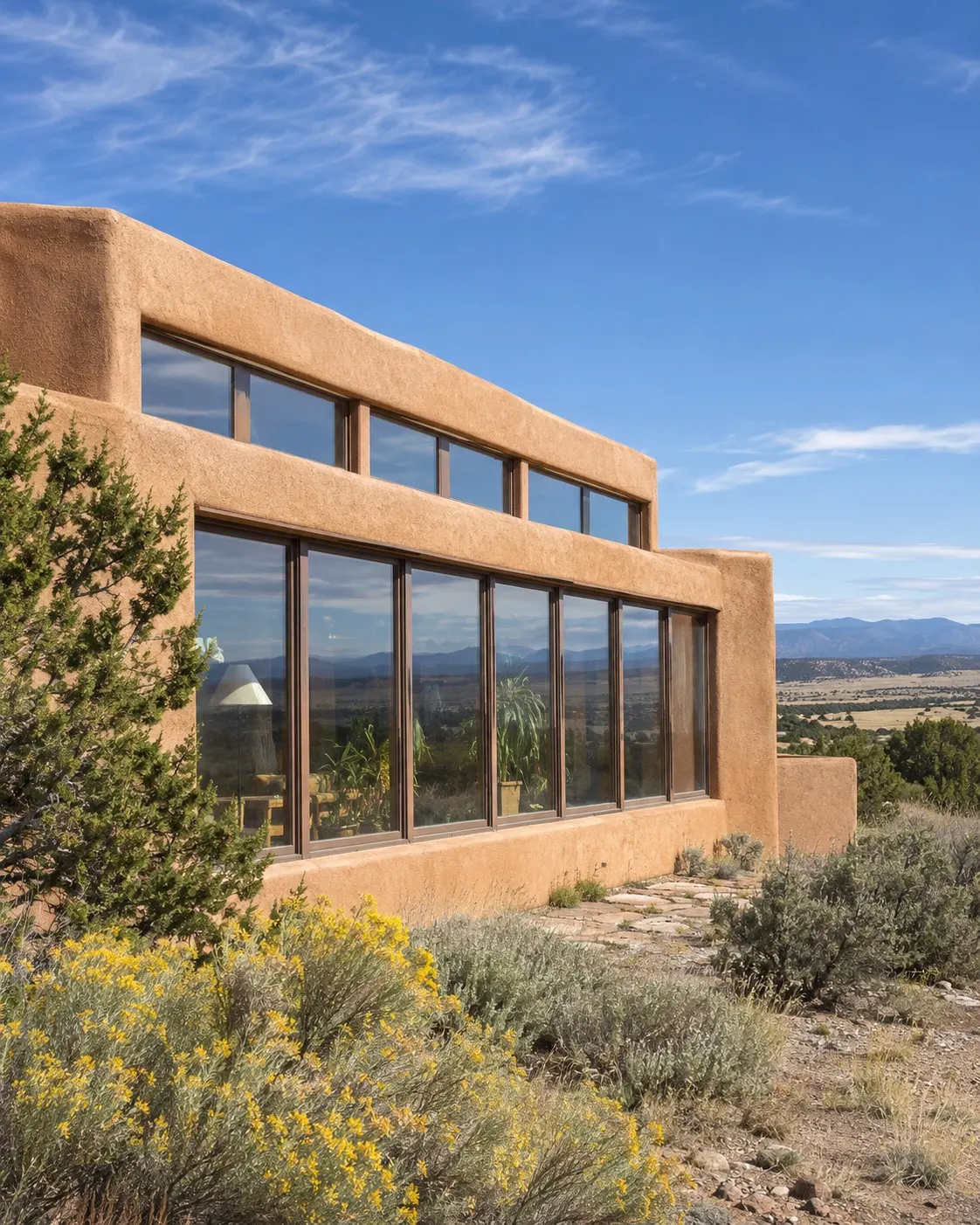
Why vinyl is the most common choice
For most Santa Fe homes built from the 1970s onward, especially the frame-and-stucco subdivisions on the south and west sides, vinyl is where the conversation starts. It insulates well, needs no painting, resists the dry air that cracks wood, and costs the least of the materials we install. Replacing builder-grade aluminum sliders with quality vinyl is one of the most noticeable comfort upgrades a house can get.
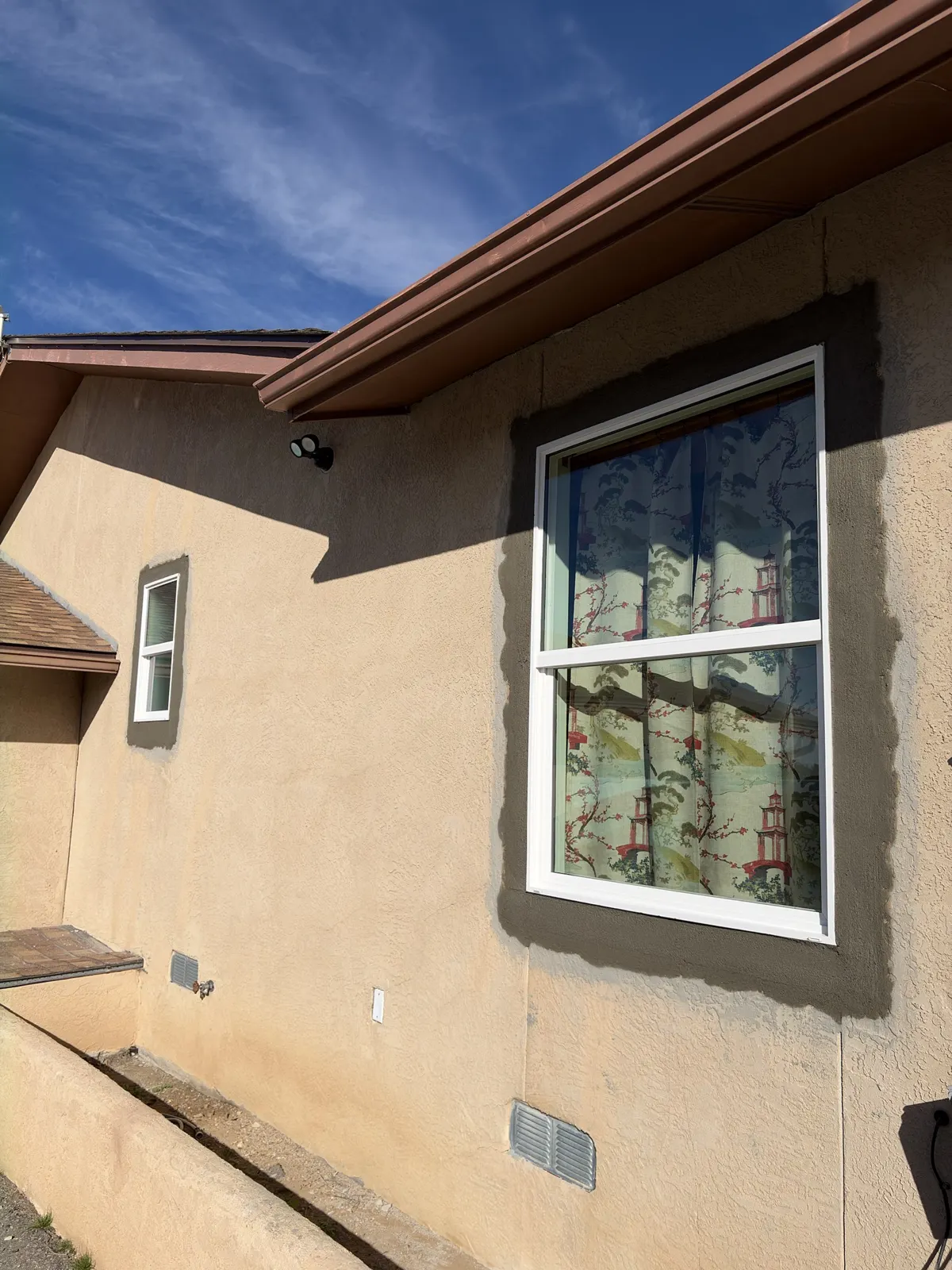
Not all vinyl is equal
The word "vinyl" covers a wide range of quality. A few details separate a window that lasts from one that sags and yellows:
- Welded corners instead of screwed or mechanically joined ones. Fused corners stay square and sealed.
- Multi-chamber extrusions: interior walls inside the frame that add stiffness and insulating air pockets.
- Wall thickness and reinforcement in the meeting rail and on larger sashes, so they don't bow over time.
- UV-stabilized compound, formulated to resist chalking and discoloration under strong sun.
- Glass package: the frame gets the attention, but the glass is most of the window's area and most of its performance.
Colors and the sun
White, almond, tan and other light vinyl exteriors handle Santa Fe's UV and heat well. Dark vinyl exteriors absorb more heat, and here the surface of a south- or west-facing dark frame can get very hot. Some manufacturers use laminated or specially formulated dark finishes designed for that; others aren't meant for this climate. If you want bronze or black frames, we'll show you the options that are built for it, and we'll tell you when fiberglass might be a better route to the look you want.
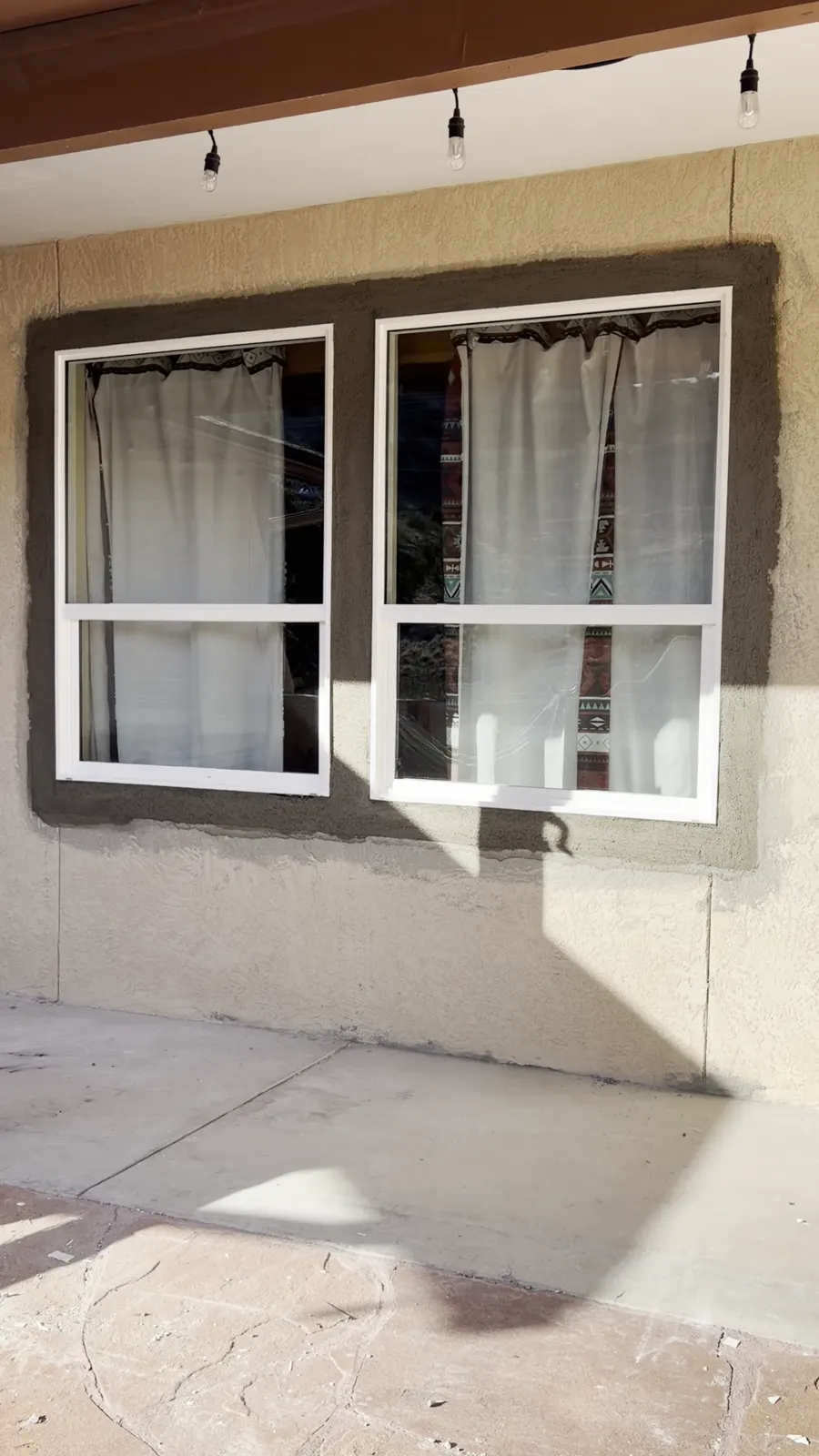
Vinyl in different Santa Fe homes
On a newer pitched-roof or flat-roof stucco home, vinyl single-hungs and sliders in a light color look right at home. On a Territorial-style house, vinyl with grilles in a colonial pattern can work well, though many owners there lean toward fiberglass or clad wood for the deeper profile. In historic districts, vinyl may or may not be approved depending on the building and the street. We'll flag that before you fall in love with a product.
Retrofit or full-frame vinyl
Vinyl windows are made in both retrofit and new-construction versions. Flush-fin retrofit vinyl is especially common here: it slips into the old aluminum frame and covers it outside with a flat flange that sits against the stucco. No cutting, quick install. Nail-fin vinyl is used for full-frame stucco cut-outs where the old frame comes out entirely. Both are built to your measured sizes.
What to expect for longevity
A well-made vinyl window installed correctly should serve for decades. The parts that wear are the moving ones: balances on single-hungs, rollers on sliders, weatherstripping. Those are replaceable. Keep tracks clean, keep weep holes clear, and your vinyl windows will outlast most of the appliances in the house.
Questions we hear about this
Will white vinyl turn yellow in the Santa Fe sun?
Quality vinyl made with UV stabilizers is designed to resist yellowing and chalking. Lower-grade vinyl is where discoloration shows up. We install lines with a track record in high-sun climates.
Can I get dark-colored vinyl windows?
Yes, from manufacturers that offer exterior finishes built for heat, such as laminates or specially formulated dark vinyl. We'll show you which products are rated for it and when fiberglass may be the better choice.
Is vinyl allowed in Santa Fe's historic districts?
Sometimes. It depends on the building's status, whether the window is visible from the street and what the review staff or board decides. We prepare the specs you'll need for review and suggest alternatives if vinyl isn't likely to pass.