
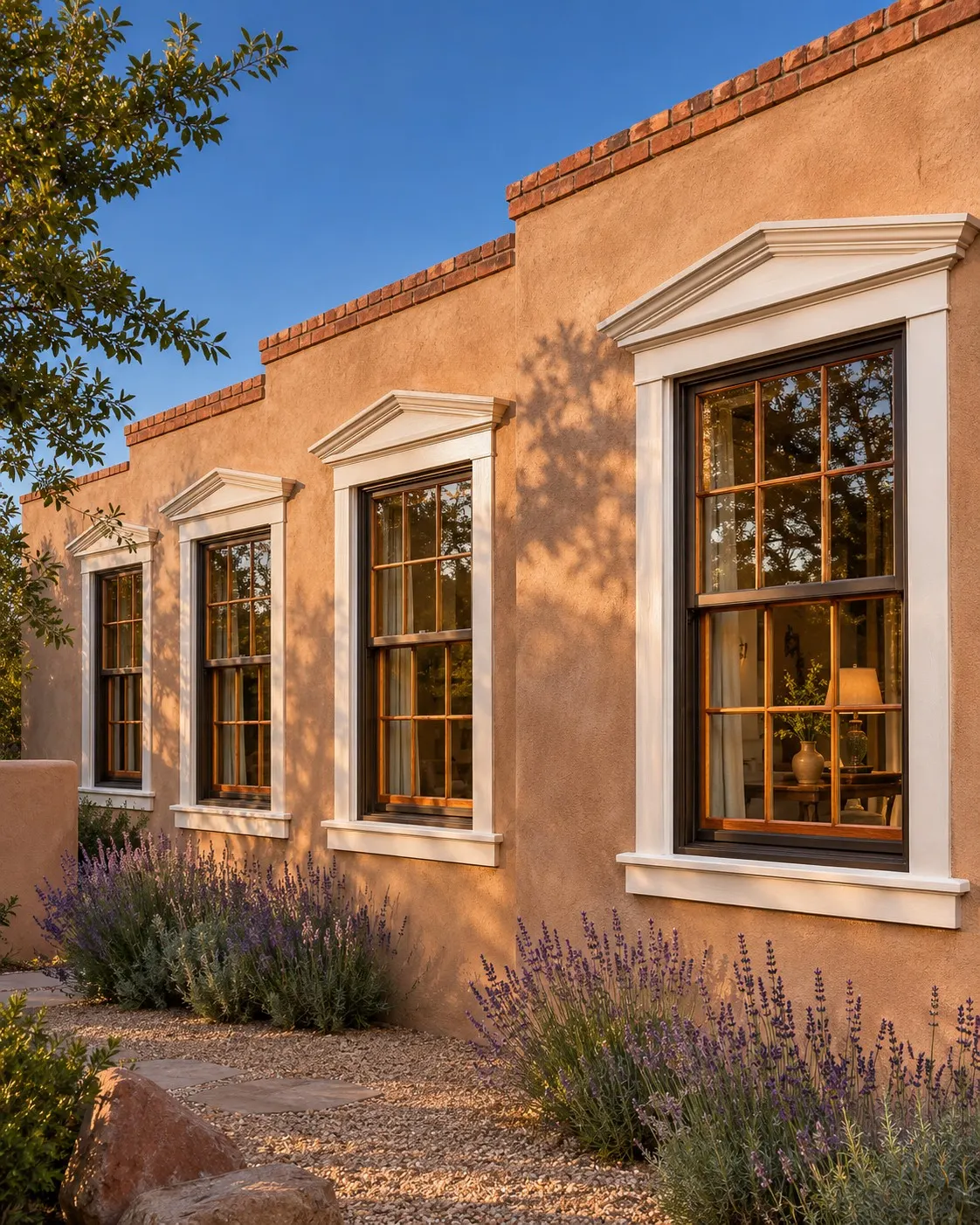
Two styles, two window traditions
Pueblo Revival homes echo the pueblos: rounded parapets, soft corners, thick walls and small, deep-set windows. Windows tend to be simple, often casements, with few or no divisions, set back in the wall.
Territorial homes came with the railroad and American influence in the late 1800s: flat roofs with brick coping, crisp edges, and taller windows framed by painted wood trim, often with triangular pediments over the top. Windows are typically double-hungs with divided lites, such as six-over-six or two-over-two.
Choosing for Pueblo Revival
- Casements or fixed windows with simple, minimal divisions.
- Earth-tone, bronze or wood-tone frames.
- Set deep in the wall to keep the shadow line.
- Wood-clad frames if you want stained wood inside.
Choosing for Territorial
- Double-hungs or single-hungs with simulated divided lites matching the original pattern.
- Painted exterior trim, often white or a traditional soft color, with pediments kept or restored.
- Wood-clad windows are the most common choice for authentic detail.
In the historic districts
Inside Santa Fe's historic districts, these style details often matter for approval. Matching the original size, division pattern and setback is usually the goal. See our historic district guide.
Not sure which style your house is? We'll help you figure it out at the measure. Call (505) 522-7707.
Questions we hear about this
How can I tell if my home is Territorial or Pueblo Revival?
Brick coping, crisp edges and pedimented window trim point to Territorial; rounded parapets and soft corners point to Pueblo Revival.
What windows suit a Territorial home?
Double-hungs with divided lites and painted trim, usually in wood-clad frames.